

Iseult Daly
Legal Fellow
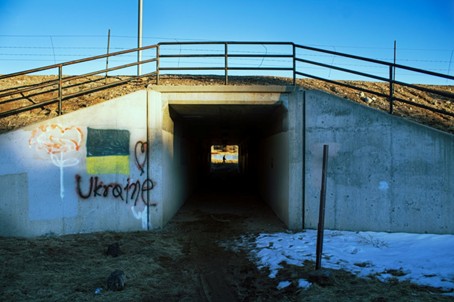
It is very difficult for a conflict which has gone on for 1433 days to continuously headline international news. It is even more difficult in a perpetually sensationalist news cycle for daily bureaucratic moves from behind the frontline to hit the front page.Yet, beyond the bombs and tanks of the mediatised frontline, Russia wields a much more insidious—not to mention illegal—kind of warfare that aims not just to permanently annex Ukraine, but to erase the Ukrainian identity altogether.
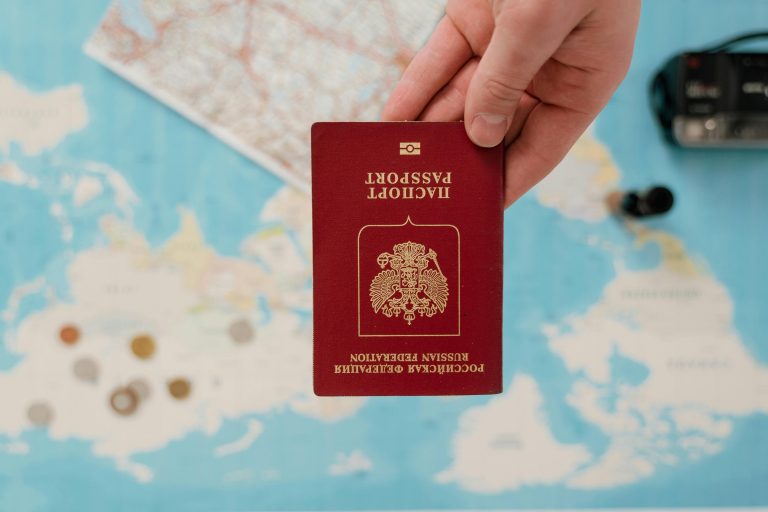
Since the beginning of the Russo-Ukrainian War, Putin’s Russia has been quietly deploying Soviet-era economic coercion and psychological tactics to create what it calls ‘Novorossiya’ (‘New Russia’) in Occupied Ukraine. The term ‘Russification’ was aptly used in a recent report by the Association of Middle Eastern Studies to describe the “systematic and multifaceted efforts to reshape not only the physical and symbolic landscapes of Occupied Territories but also the very identity and consciousness of their population”. And what is the Kremlin’s favoured weapon for the execution of Russification? Passports.
PASSPORTISATION
The deployment of ‘passportisation’ as a lever of Russification began when, a few months after the beginning of the 22nd of February 2022 invasion, Putin signed a decree on the 11th of July 2022 allowing all Ukrainians to apply for Russian citizenship with fast-tracked access. Ukrainians could now acquire a Russian passport without needing to have lived in Russia or pass the usually necessary Russian language test. Instead, processing centres simply required that Ukrainians publicly swear allegiance to Russia and, in an emerging number of cases, renounce their Ukrainian citizenship.
‘Forced Russification is an existential and morally vicious threat’
At first, these passports were honeyed with incentives, such as an increase in adopters’ salaries and pensions and even the handing out of cash at processing centres. As this scheme tried, and to some extent succeeded, to fray connections between the people of the Occupied Territories and free Ukraine, its imposition became more and more suffocating. Meanwhile, when the Nova Kakhovka dam mysteriously exploded in June 2023, triggering a huge environmental and human crisis, Russia blocked United Nations aid for victims, instead setting up its own two-tiered humanitarian aid system which reportedly offered better conditions for Ukrainians with Russian citizenship.
Support our work!
We can only do our work thanks to the support of brave, passionate people like you!
Your donation will help us to keep fighting for human rights and access to justice for everyone, everywhere.
OBSTRUCTING ECONOMIC AND SOCIAL RIGHTS
Not long after the fast-tracking of passportisation for Ukrainians in Occupied Territories, access to jobs, education, and State services, including life-saving healthcare, became dependent on whether a person had sworn allegiance to the Occupying Power.
Such ‘passportisation’ is in direct violation of international law, as Article 45 of the 1907 Hague Convention forbids “compel[ling] the inhabitants of occupied territory to swear allegiance to the hostile Power.” Further, the International Court of Justice and the European Economic and Social Committee have both repeatedly stressed that it is the legal duty of Occupying Powers to respect, protect, and ensure the economic and social rights of all individuals in Occupied Territories, regardless of their citizenship.
In its recent report, the European Broadcasting Union investigative journalism network collected testimonies from a number of Ukrainian women who have escaped or still live in an Occupied Territory, all confirming that they were required to show a Russian passport at pharmacies and hospitals in order to receive life-saving care and medication. In 2025, even access to insulin—without which diabetics can die after three days—is being used to coerce Ukrainians’ into obtaining a Russian passport.
“A person has to live somehow,” one of the women was quoted saying, “but this is the same thing as a weapon. Sometimes these moral weapons hurt harder than a machine gun.”
The final step of this weaponised ‘passportisation’ was deployed on the 20th of March, 2025, when Putin signed a decree requiring that Ukrainians in Occupied Territories either “regulate their legal status” by adopting Russian citizenship or leave their home. The deadline given for compliance was the end of September, which just passed, and the decree stipulates that they will now be treated as foreigners or ‘Stateless people’ and are obliged to leave the territory within 90 days.
THE ULTIMATE GOAL: ERASING UKRAINIAN IDENTITY
This treatment continuously elicits accusations of ethnic cleansing, defined by UN experts as “a purposeful policy designed by one ethnic or religious group to remove by violent and terror-inspiring means the civilian population of another ethnic or religious group from certain geographic areas,”. Therefore, methods such as passportisation, the destruction of all Ukrainian symbols, and history-revisionist youth indoctrination in the Occupied Territories, which clearly seek to erase the Ukrainian identity altogether, meet this definition. Forced Russification is thus an equally existential and morally vicious threat.
A mediatic focus on the war of attrition, military violence, and State torture justifiably persists in the news reporting on the Ukrainian invasion. Still, more should be done to ring the alarm on the insidious war behind the frontlines, as Ukrainian communities, heritage, and memories hang in the balance.
What happens in Ukraine has a global impact. Putin is following a playbook that a lot of authoritarian other leaders are progressively implementing. Allowing these violations to persist with impunity in Ukraine, in part by failing to study and report on them, undermines the authority of international law everywhere. Concretely, the lack of international condemnation on this matter poses an existential risk to the people that international human rights law protects around the world, not just in Ukraine.
Just Access e.V. is a non-party political organisation, whose mission is to support human rights and access to justice worldwide. The views and opinions expressed in this piece and those of the author, and do not necessarily represent those of Just Access e.V.
Subscribe to the Just Access newsletter
Don’t miss any of our blog posts, or any of our other great content!
Stay up to date with our work by subscribing to the Just Access Newsletter (six mailings per year).