



Esra Uzuner
Legal Intern
How algorithmic targeting challenges international law, and where accountability truly resides
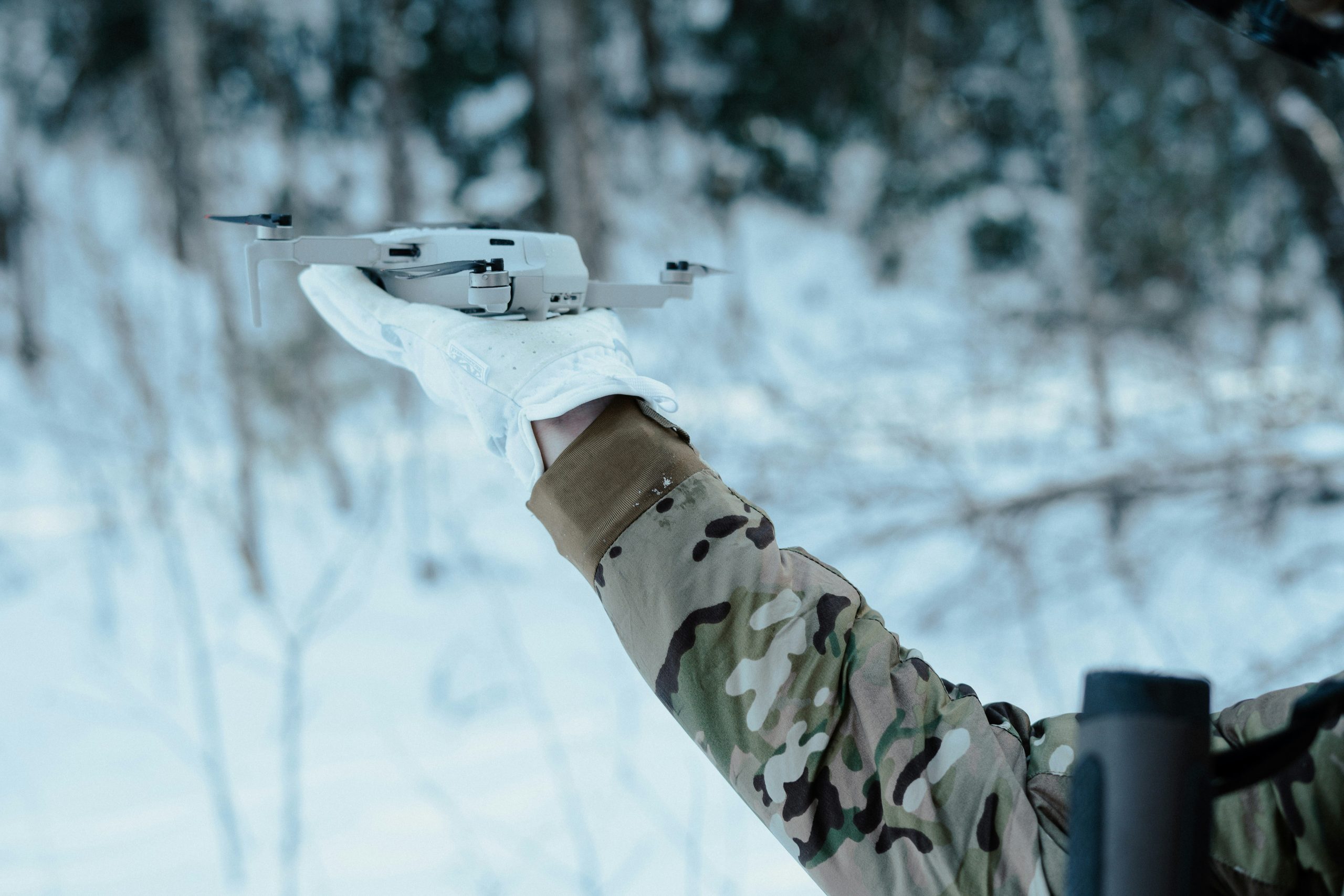
Algorithms and automated systems have been replacing soldiers on the battlefield in the last few years. Instead of relying only on soldiers, modern warfare uses drones and algorithms to decide who and what to target. While this may sound progressive, it raises a valid concern: Can civilian technology designed for efficiency really be mobilised in an armed conflict without violating international law?
Amid these shifts, the architects of warfare have changed fundamentally. Sovereign States once held a monopoly on military operations and defence industries, but private tech enterprises now command a decisive share of the modern battlefield. Yet, when an algorithm accelerates a human rights violation, where does accountability truly reside?
Dual-Use Technology and Regulatory Gaps
The answer is closer and more urgent than it appears. Recent developments in Ukraine, Gaza, and Iran show that such systems including AI-targeting software and drone surveillance are being heavily and actively integrated into military operations today. However, some of the most significant frameworks fail to address this. Article 2(3) of the EU Artificial Intelligence Act excludes systems developed or deployed exclusively for military, defence, or national security purposes from its scope.
As the privatisation of warfare and algorithmic security accelerate, tech companies can no longer claim to be neutral commercial actors.
This blanket pass does not extend to dual-use technologies, tools that are developed for commercial efficiency yet are easily adaptable to warfare, but the very existence of this exemption raises deep concerns. It creates massive grey zones between purely defensive systems and adaptable civilian software.
Distinction, Target Recommendations, and the Threat to IHL
Most severely, these grey zones threaten the three core International Humanitarian Law principles of distinction, proportionality, and precaution. As the privatisation of warfare and algorithmic security accelerate, tech companies can no longer claim to be neutral commercial actors.
Fully autonomous weapons and AI-decision-support systems should not be confused and should be separated. Fully autonomous weapons choose and attack targets on their own, which is why the International Committee of the Red Cross (ICRC) calls for a ban on them. By contrast, the systems used in recent conflicts only recommend targets for human personnel to approve. Yet with the speed of war, when targeting relies heavily on automated predictions, operators have little time for precautions. The software can still fail to tell civilians apart from combatants and miscalculate collateral damage.

The cost of ignoring these limits and responsibilities is undeniably terrifying. By design, algorithms learn from past data, and those data carry the risk of being biased, flawed, or manipulated. In the chaos of a conflict, software cannot reliably tell the difference between a panicked civilian and an active combatant. And if an automated targeting system misidentifies a home or a hospital, can we really just dismiss that as a technical ‘glitch’?
With the growing use of these technologies in conflicts worldwide, questions of legal responsibility and accountability can no longer be ignored.
Corporate Responsibility and Meaningful Safeguards
Given the imminency of the issue, accountability cannot wait for new treaties alone. Under the UN Guiding Principles on Business and Human Rights, technology developers have an immediate duty to respect human rights. This means looking beyond obvious infringements and addressing the foreseeable civilian harm built into how their systems operate.
[W]hen an algorithm accelerates a human rights violation, where does accountability truly reside?
But, how should this look in practice? Standard compliance checks are usually insufficient in war zones, where routine paperwork cannot prevent real harm. Prior to deployment, companies have to test their systems for civilian harm and bias. Just as importantly, their licensing agreements must include explicit exit terms, allowing them to cut off access the moment a system is used for unlawful attacks. However, these Principles are not legally binding, meaning there is no current way to enforce these duties on technology developers at the international level.
In light of current developments, technology built for efficiency cannot be safely deployed in armed conflict without threatening basic human rights, at least for the moment. While the EU AI Act and other regional frameworks provide broad exemptions for military uses, these regulatory gaps do not relieve corporate responsibility. When code decides who poses a threat and who does not, accountability can’t just disappear down the supply chain. Without enforceable corporate safeguards, how can we ever ensure that these systems operate in full compliance with international human rights and humanitarian law?
Support our work!
We can only do our work thanks to the support of brave, passionate people like you!
Your donation will help us to keep fighting for human rights and access to justice for everyone, everywhere.