
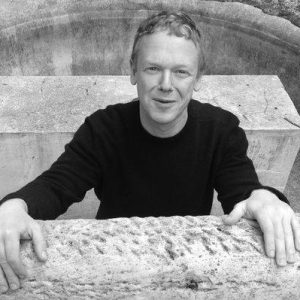
Prof. Dr. Dr. Mark Somos.
Chairman of the Board
and Special Counsel
Thank you very much for the kind invitation. I’m happy to be here and I’m grateful for the opportunity to discuss the worst crisis of our time.
On the 9th of January, the 1000th day of the ongoing conflict, the World Health Organization and the UN Office for the Coordination of Humanitarian Affairs officially declared the Sudanese civil war to be the “worst humanitarian crisis globally”. 34 million people, which is two thirds of the population, need urgent assistance. Over 21 million people face acute food insecurity. With almost 14 million people uprooted, Sudan sees the world’s largest displacement crisis.
This is the result of a civil war between two parties: the Sudanese Armed Forces (the SAF), and the Rapid Support Forces (the RSF). Their leaders, Abdel Fattah al-Burhan and Mohammed Hamdan Dagalo Musa (known as Hemedti) are credited with overthrowing Omar al-Bashir in 2019. Burhan seized power in a coup d’etat in October 2021, and the war with the RSF began in April 2023.
Since then, the RSF has committed egregious atrocities, including genocide. I will not detail them because they are so numerous, and because you cannot have followed the news without learning about them. Instead, I will address a dimension of this conflict that has received far less attention.
Sudan’s Government, in charge of the SAF, is not a government. The UN, the African Union, and many States have refused to recognise Burhan’s regime as legitimate. Some are simply calling it the Port Sudan Authority, and the African Union has suspended Sudan’s membership precisely due to the lack of a legitimate government. Others, including the UN, describe it as a ‘de facto’ government. This is a technical term under international law. It means acknowledgement that Burhan controls some territory and population, but has no legitimacy and no authority to sign treaties on Sudan’s behalf, especially treaties that concern land or maritime boundaries, or water and mineral resources. The States that support the SAF in return for such treaties should expect either endless, or quickly lost litigation.
The US, the UK, the African Commission on Human and Peoples’ Rights, France 24 and Human Rights Watch have conducted separate investigations and found that the SAF has been using chemical weapons and committing various war crimes and crimes against humanity. Burhan is personally under US sanctions for his role in these crimes and for ‘undermining the goal of a democratic transition’. These crimes do not allow for amnesty or statutes of limitation. Under international law, States have a distinct obligation to withhold recognition from Burhan’s regime.
Perhaps surprisingly, unlike the RSF, Burhan’s regime still bears State responsibility. This is partly because it views itself as the legitimate government, and because the UN regards it as the de facto government. It is Burhan-appointed officials who represent Sudan at international fora, and Burhan can launch interstate proceedings, such as the ICJ case against the UAE concerning genocide, which had the very rare distinction of being struck by the ICJ from its list of contentious cases due to its frivolous nature. Burhan’s de facto government has been very active at such fora, whether through multiple complaints to the Security Council, or in sessions of the General Assembly and the Human Rights Council. One thing they have not done so far is to even attempt to meet Sudan’s standing obligations to report to the UN bodies that oversee human rights treaty mechanisms.
The flip side of Burhan’s ability to mobilise Sudan’s status and resources under international law is that his regime bears full State responsibility for providing protection and services to the Sudanese people. Instead, it has committed countless violations of international humanitarian law and human rights law, and of domestic Sudanese law, as extensively documented by the UN. These violations include repeated indiscriminate air strikes of civilian neighbourhoods and protected sites such as markets, hospitals, and camps for internally displaced persons; systematic ethnic targeting of specific Arab tribes that arguably amounts to genocide; widespread extrajudicial executions of civilians accused of disloyalty; mass arbitrary detention accompanied by torture, sexual violence, and enforced disappearances; and the documented refusal to protect civilian populations in El Fasher despite having both knowledge of the risk and the capacity to intervene. The refusal to protect in El Fasher is part of a broad pattern of the SAF’s failure to protect the civilian population even when it can, for instance by refusing to negotiate humanitarian corridors for food and medical access, despite managing to negotiate lucrative access to oil fields, for instance.
One could plausibly add to this list the Burhan regime’s consistent sabotage of peace negotiations, and the effect of such intransigence on the Sudanese people’s chances of survival. Unlike the RSF, so far Burhan has refused to attend or send delegates to the IGAD-led talks in Addis Ababa in July and in December 2023; the Bahrain talks in January 2024; the US-sponsored Geneva talks in August 2024; and the Quad Truce Proposal in November 2025. It is easy to assess such conduct as immensely damaging under both Sudan’s constitutional law, which assigns the protection of public interest to the de facto government, and under international law, let alone basic morality.
Finally, Sudan’s de facto government works closely with and, according to some accounts, is run by terrorists and the Muslim Brotherhood. There are numerous and confirmed reports that the SAF runs operations with the Islamist Al-Bara’ ibn Malik Battalion, sanctioned for war crimes in Sudan’s Al Jazirah state and for its close ties to Iran. According to victim statements, the Battalion is responsible for chemical warfare, decapitations, the persecution of human rights defenders, and countless other crimes committed in close cooperation with SAF soldiers and officers. Victims and journalists also report that the Battalion sabotages Sudan’s judiciary by forcibly dragging plaintiffs and defendants into Islamist courts, and threatening and murdering secular judges. An FATF listing of Sudan would therefore complement existing OFAC and UN sanctions.
Now the good news. I said at the beginning that the SAF and the RSF are credited with overthrowing Bashir, but I don’t believe this is the case. Sudan has an extraordinary tradition of civil society self-organisation. One finds communal, self-help systems (Nafeer, in Arabic) in Lebanon, Yemen, Somalia, and these generally take shape wherever the State fails, or retracts from providing security and basic services. These organisations are known by several names, as emergency response rooms, neighbourhood or popular committees, civilian committees, while the UN Development Program likes to call them ‘peace committees’. The limited reporting we have about them usually depicts women cooking soup in steel barrels, men repairing mosques, volunteers teaching children with few or no resources; and old or injured men trying to protect villages with ancient hunting rifles and appeals to the good will of marauding militias.
Sudan’s resistance committees happen to be extraordinarily sophisticated. Mutual aid associations that have long been in place reached an unprecedented level of organisation and efficiency between 2013 and the 2019 revolution, comprising thousands of volunteers around the country, including young people, doctors, teachers, and engineers. They ran clinics, community kitchens, water provision, psychosocial support for victims of conflict and sexual violence, and basic infrastructure. Their work has been praised by the EU’s High Representative for Foreign Affairs, and the Peace Research Institute in Oslo nominated them for the Nobel Peace Prize.
What I fear is less often discussed is their constitutional significance. Notably, they overthrew Bashir, not the army. While fluidity remained a defining feature of Sudanese emergency response rooms, after 2013 they established horizontal, local and regional, and eventually vertical, provincial and federal, structures of organisation. It was their chosen representatives who signed the 2019 Declaration of Freedom and Change Charter, calling for Bashir’s removal from power. My reading of all the accounts I could get hold of is that without the widespread popular protests and strikes calling for civilian government, the eventual military takeover by the SAF and the RSF would not have been possible. The mandate, legitimacy, and authority of the Transitional Military Council that finally replaced Bashir in April 2019 were severely constrained by the conditions defined by the Sudanese people. In constitutional terms, the TMC took power in August 2019 on the basis of the Draft Constitutional Declaration that the SAF signed with the Forces of Freedom and Change, consisting of emergency response rooms’ and trade union representatives. Abdalla Hamdok’s first government was formed in August 2019 under these constraints. Burhan’s coup d’etat in October 2021 brought the Sudanese public out on the streets again, leading to Hamdok’s reinstatement in November – again, military takeover proved untenable. As you know, Hemedti disapproved of Burhan’s seize of power, Hamdok resigned two months later, Islamists captured government and military positions, and the momentum toward State collapse and a return to civil war became increasingly hard to arrest.
I am summarising a great deal of complexity just to make the point that under constitutional and international law, actual legitimacy belonged, and continues to belong, to the extraordinarily brave and politically sophisticated people of Sudan, who managed to make their will explicitly known. Jean-Jacques Rousseau would have been impressed. The current so-called de facto government is several steps removed from this source of legitimacy.
I am grateful for your attention, and you may wonder why I thought these points are worthy of your time today. First of all, nothing I said is meant to distract or detract from the heinous crimes committed by the RSF. The points I wished to make that may be worth your time are these.
First, Burhan’s regime is not Sudan’s government.
Second, given its crimes, lack of legitimacy, lack of international recognition, cooperation with and sponsoring of terrorists, and the other variables I have mentioned, France, like other States, has a positive obligation to refuse to recognise it as Sudan’s government.
Third, in addition to military facts on the ground, such as the RSF’s lack of an air force, the SAF and the RSF are not in the same position under public international law either, partly because SAF actions and omissions generate State responsibility.
Fourth, the SAF’s ethnic targeting and discrimination arguably amount to genocide.
Fifth, more authorities, including French politicians, should be speaking directly to Sudanese civil society.
Sixth, reporting is strangely biased. The RSF’s crimes are showcased in detail, at length, and rightly so, in media coverage. By contrast, the SAF’s are almost invisible. A long-form CNN investigation published last month about the SAF’s mass killing of civilians, and dumping of bodies into canals and mass graves, is a rare exception.
I don’t know the reason for this media bias. In my professional experience of 32 years as a student of international relations and international law, I have never seen such a strange radio silence about the crimes and victims of one party to a conflict.
The seventh and final reason why I am glad to be able to speak to you today is because I was asked to. Colleagues and I interviewed Sudanese refugees, many of whom turned out to be SAF victims. One of our first interviewees was a lawyer and human rights defender, who arrived with her infant daughter. The baby clung to her mother and wailed inconsolably whenever separated. We learned during the interview that due to her human rights work, the lawyer was kicked in the stomach by SAF soldiers while she was pregnant, and told, that people like her were better off dead than having children. The cries of the traumatised baby, kicked while still in the womb, became the backdrop to multiple interviews we conducted that day, with people who were shot in the head, set on fire, raped, beaten, arbitrarily detained, and otherwise abused by SAF soldiers and officers.
The last person we interviewed happened to be another human rights defender. She lost her baby girl, Mary, due to the war. She reported SAF soldiers raping women and children in return for food and medicine, women getting pregnant as a result and committing suicide, and a range of other crimes I won’t go into. To ensure that she’s giving informed consent to the interview, we asked her what she thought the interview was about. She looked me in the eye and said that we may think the interviews are about human rights; for them, it’s the last chance to put exactly what is happening on record.
It is these two voices, out of the 34 million, the little girl’s from our first interview, and the grieving mother’s from our last, that I hoped to make you hear.
Thank you.
Support our work!
We can only do our work thanks to the support of brave, passionate people like you!
Your donation will help us to keep fighting for human rights and access to justice for everyone, everywhere.