


Madhawi Uni
Legal Intern
In 2024, the EU promised that any worker harmed in a European company’s supply chain would have a clear route to court. Before that promise was ever kept, the EU wrote it off as red tape. The clear route is now twenty-seven separate doors: one for each Member State’s national law, each with its own rules for entry.
The Corporate Sustainability Due Diligence Directive (CSDDD) (Directive (EU) 2024/1760) was praised as a landmark piece of legislation for corporate accountability. It requires companies to “identify, prevent, and address human rights and environmental abuses throughout their global supply chains”.
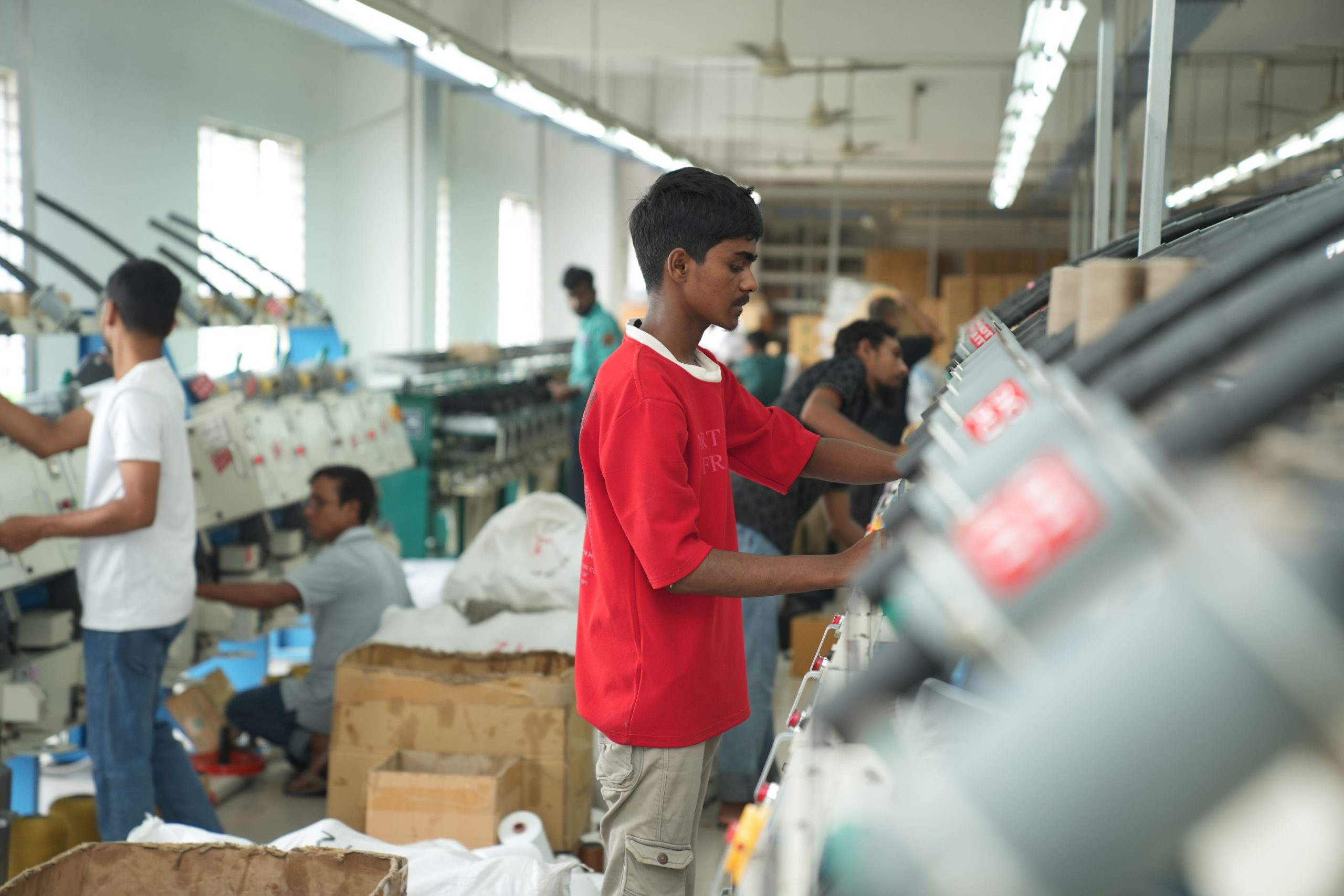
Photo: Galib Rahman Nadim / Workers in a textile factory operating machinery. Source: https://www.pexels.com/photo/textile-factory-workers-operating-machinery-39351226/.
Less than two years after it was adopted, the Omnibus (Directive (EU) 2026/470) attempted to ‘simplify’ the Directive in the name of improving competitiveness in the EU. By removing its harmonised civil liability regime, the Omnibus made access to justice more complicated for victims, created legal uncertainty for businesses, and may even undermine the very competitiveness it seeks to promote.
The Original CSDDD Regime
The original text of the CSDDD established an EU-wide rule holding companies liable for damages caused by their due diligence failures across their global supply chains. Crucially, victims could authorise NGOs or trade unions to bring claims on their behalf. This meant that the Directive not only protected workers in Europe, but also those suffering abuse further down the supply chain, even if they were thousands of kilometres away.
While simplification was presented as a solution, it was only half the prescription.
For instance, a worker mistreated by a Colombian supplier of a German company would have been able to sue in German courts if the company’s failure to carry out proper due diligence caused them harm. This would have provided victims with an established route to pursue claims. Businesses would have also benefited from a single, predictable civil liability regime.
The Omnibus and its Effects on Victims and Businesses
In 2025, the European Commission proposed Omnibus I, pledging to “cut red tape and simplify EU rules for citizens and businesses”. This built on the Draghi Report which found that regulation was hindering the bloc’s competitiveness compared to the US and China. Draghi specifically pointed to “the EU’s sustainability reporting and due diligence framework as a major source of regulatory burden”.
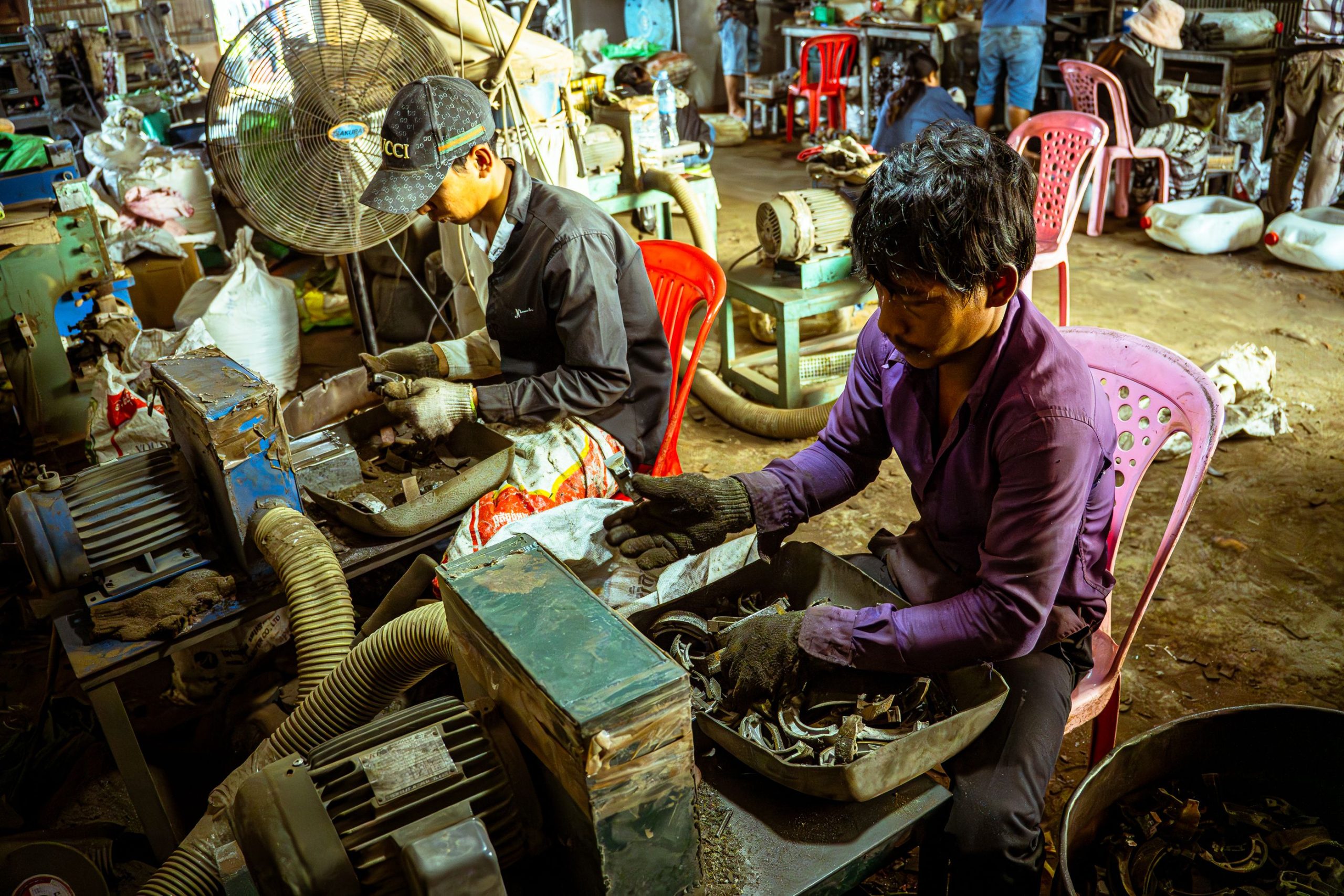
Photo: Kriya Sinan / Men working with machinery in an industrial workshop, surrounded by tools and equipment. Source: https://www.pexels.com/photo/workers-in-industrial-workshop-with-machinery-39839954/.
Adopted in 2026, the Omnibus narrowed the scope of companies captured under the Directive and dismantled the EU-wide civil liability clause and the option for victims to authorise an NGO or union to bring claims on their behalf. The conditions for liability now depend on national law, with only a few EU-level protections left in place.
As a result, victims have a weaker channel by which to pursue claims and multinational companies operating across the EU are no longer afforded the certainty of relying on one regime. Instead, they must navigate a patchwork of twenty-seven laws that could address due diligence failings to varying degrees, resulting in “significant unpredictability for victims, companies, and courts alike”.
The Competitiveness Paradox
The Commission promised a “less complex and more harmonised” framework, but has failed to deliver. The Draghi Report identified fragmentation caused by legal, fiscal and regulatory differences across Member States as a major obstacle to EU competitiveness. While simplification was presented as a solution, it was only half the prescription: Draghi paired it with “increasing legal certainty… by ensuring that there are fewer, clearer… rules”.
In its stead stand twenty-seven doors: One for each Member State’s national law, each with its own rules for entry.
In delegating liability to the Member States, the Omnibus only deepens the fragmentation that Draghi warns against. Critics have described the Omnibus as “nothing short of a gutting of the [CSDDD]”. This is an accurate depiction: the Directive still imposes due diligence obligations and allows damages for failures, but it no longer provides a uniform mechanism for victims to claim them.
The Way Forward
While the Omnibus does not dispense with civil liability in the EU, “the conditions for triggering such liability would depend on the legislation of the Member State whose courts have jurisdiction.” This means that the impact of the CSDDD rests on its enforcement at national level. As one door became twenty-seven, it remains to be seen whether all of them will offer pathways to justice for workers across global supply chains.
Support our work!
We can only do our work thanks to the support of brave, passionate people like you!
Your donation will help us to keep fighting for human rights and access to justice for everyone, everywhere.