
Just Access is a German non-governmental organisation that documents serious violations of international humanitarian and human rights law and represents victims who would otherwise remain unheard. Through our Sudan Project1 we have interviewed survivors of the conflict now sheltering in refugee settlements in Uganda. This statement addresses the accounts provided by survivors concerning the alleged use of chemical weapons by the Sudanese Armed Forces (SAF).
International attention on Sudan has rightly focused on the extensively documented atrocities committed by the Rapid Support Forces. This statement addresses alleged grave conduct by the other party to the conflict, the SAF, particularly the apparent use of chemical weapons. Such allegations remain insufficiently scrutinised, and accountability for serious violations must apply to all parties if it is to contribute to a durable peace.
The war that began in April 2023 has resulted in what the United Nations describes as the world’s worst humanitarian crisis. Around 34 million people currently require humanitarian assistance, more than 20 million face acute food insecurity, and nearly 14 million have been displaced.2 The SAF, under General Abdel Fattah al-Burhan, exercises effective control over much of the country and is treated by the United Nations as Sudan’s de facto authority. With that status comes the full scope of State responsibility under international law, including responsibility for the conduct of forces under its command or operating alongside it, including the Al-Bara’ ibn Malik Brigade, which has already been sanctioned by the United States.
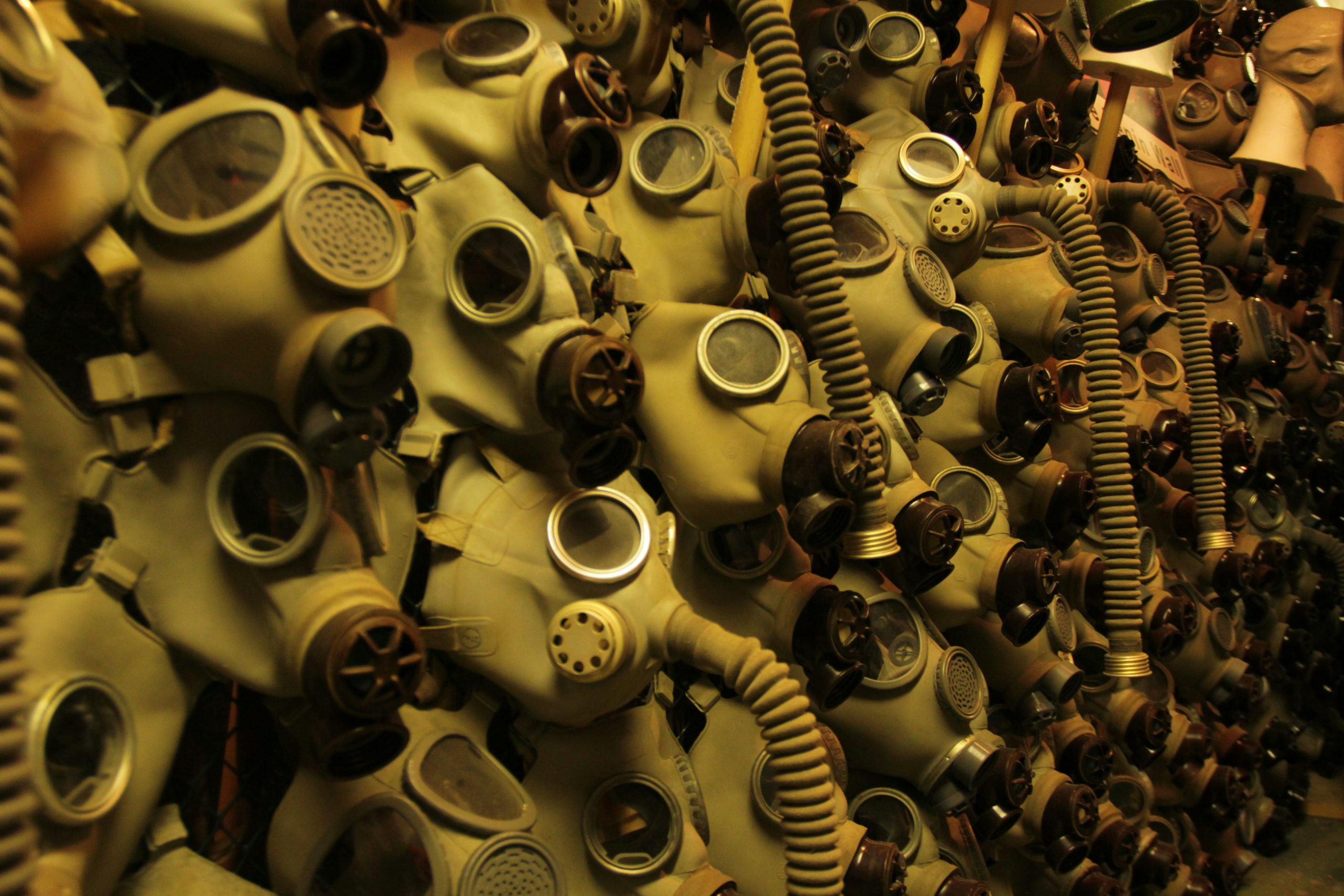
The prohibition on chemical weapons is one of the oldest and most absolute in international law. Sudan has been a party to the Chemical Weapons Convention since 1999. Deliberate use of such weapons breaches that Convention and customary humanitarian law.3 The record now assembled against the SAF is serious and convergent:
- In January 2025 The New York Times, citing four senior United States officials, reported that the Sudanese army had used chemical weapons on at least two occasions during the war, that the agent was chlorine, and that its use had been personally authorised by General al-Burhan.4
- On 24 April 2025 the United States formally determined, under the Chemical and Biological Weapons Control and Warfare Elimination Act, that the Government of Sudan used chemical weapons in 2024, and found Sudan in non-compliance with the Chemical Weapons Convention. Sanctions followed in June 2025, and further measures took effect in July 2026 when Sudan failed to change course. The United States has repeatedly called on Sudan to cease all use and cooperate with the Organisation for the Prohibition of Chemical Weapons (OPCW).5
- In October 2025 the France 24 Observers unit, working with the investigative organisation C4ADS, published an open-source investigation indicating that chlorine was dropped from the air on 5 and 13 September 2024 around the Garri military base and the nearby al-Jaili oil refinery north of Khartoum (then held by the RSF) as the SAF sought to retake them. Reviewers identified chlorine containers beside small craters and a characteristic yellow-green cloud. Because the SAF is the only party to the conflict with an air fleet capable of such attacks, the evidence points to the army. Human Rights Watch independently verified the geolocation and corroborated the findings.6
These are not the first such allegations. In 2016, Amnesty International documented credible evidence of at least thirty suspected chemical attacks by government forces in the Jebel Marra area of Darfur. The reported symptoms were consistent with exposure to blister agents, and an estimated 200 to 250 people were killed, many of them children.7 No independent international investigation ever followed. Sudan was invited to investigate itself, reported that it had found no evidence, and the matter lapsed.8
The United Kingdom has stated that it remains “deeply concerned” by reports of chemical weapons use in Sudan and has called on Sudan to publish the findings of its national investigation.9 It requires the suspected perpetrator to investigate its own conduct, despite the fact that this approach has produced no accountability since 2016. Members have already pressed the Government on the American determination on the floor of the House.10 That progress should be maintained.
The following accounts are drawn from testimonies given to Just Access with informed consent. Identities are withheld for the witnesses’ safety. Full statements and consent records are held on file and can be shared with Parliament in confidence. We report faithfully what survivors told us, and note how closely it tracks the findings summarised above.
- Victim statement 1. A member of a neighbourhood mosque’s humanitarian committee in the Umbadda district of Omdurman describes how, after the SAF recaptured Khartoum, a chemical agent killed large numbers of people in his area, along with cattle and other animals. Victims died quickly, with severe gastrointestinal symptoms. Neighbours found bodies in homes, and some deaths were publicly attributed to cholera. He recounts that an acquaintance was chemically burned on the arm when the wind shifted, and that in one incident the agent drifted on the wind from Salha to Imbadda, killing some twenty to thirty people within an hour.
- Victim statement 2. A human-rights and anti-corruption activist from Lagawa in West Kordofan, from the Messeriya community, describes his people being “subjected to extermination and attacks with chemical weapons” on the Kordofan border on account of their ethnic and tribal identity, amid a wider blockade in which aid and education were denied and communications were cut.
- Victim statement 3. A trader from Nyala, also from the Messeriya community, recounts that as his family fled the city in 2023 his elderly mother died “due to poisonous gases”, unable to breathe.
No single testimony is sufficient on its own to establish the case. Considered collectively, however, and alongside the United States determination, the findings of France 24 and Human Rights Watch, and the 2016 Darfur precedent, these first-hand accounts provide a substantial basis for an independent international investigation. One of the human rights defenders we interviewed told us that, for her, the interview was her last chance to put on the record what had happened. Parliament can help ensure that the record is acted upon.11
Chemical weapons were meant to belong to a past that the international community resolved not to repeat. The strength of that commitment will now be measured by the response to their use in Sudan and by whether those affected receive the protection and attention they have too long been denied.
- https://just-access.de/sudan-project/ ↩
- UN OCHA and UNHCR, Sudan situation reporting, 2026. See news.un.org/en/story/2026/04/1167301 ↩
- See ICRC Rule 74, https://ihl-databases.icrc.org/en/customary-ihl/v1/rule74 ↩
- https://www.nytimes.com/2025/01/16/world/africa/sudan-chemical-weapons-sanctions.html ↩
- https://www.state.gov/releases/2025/05/imposing-measures-on-sudan-for-its-use-of-chemical-weapons; https://www.thenationalnews.com/news/mena/2026/07/22/sudan-armys-chemical-weapons-use-leads-to-new-us-sanctions/ ↩
- https://www.france24.com/en/africa/20251009-chemical-weapons-sudan-part-1-investigation-attacks-chlorine-al-jaili-refinery; https://www.hrw.org/news/2025/10/09/disturbing-reports-of-sudans-military-using-chlorine-gas ↩
- https://www.amnesty.org/en/latest/news/2016/09/sudan-credible-evidence-chemical-weapons-darfur-revealed/ ↩
- https://questions-statements.parliament.uk/written-questions/detail/2017-03-20/HL6160 ↩
- https://www.gov.uk/government/speeches/statement-to-the-30th-session-of-the-conference-of-states-parties-of-the-opcw; https://www.gov.uk/government/speeches/national-statement-of-the-united-kingdom-at-the-opcw-112th-executive-council ↩
- https://hansard.parliament.uk/commons/2025-07-16/debates/9A7D3260-CB25-407C-A537-4DA44BE7836C/Sudan ↩
- See, for context, Just Access’s published submissions to UN mechanisms: on the SAF air campaign and attacks on civilian infrastructure, https://www.ohchr.org/sites/default/files/documents/issues/internaldisplacement/cfis/int-humanitarian/subm-international-humanitarian-law-cso-18-just-access-ev.pdf; and on the SAF’s military-commercial and procurement networks, https://www.ohchr.org/sites/default/files/documents/issues/business/cfis/ga81/subm-corporate-governance-business-cso-3-just-access.pdf ↩
