Both parties must answer
A peace that holds requires that both parties answer for their conduct, not only one.
Accountability for the Sudanese Armed Forces
Since September 2025, Just Access has been documenting violations and pursuing accountability for crimes committed by the Sudanese Armed Forces (SAF) in Sudan’s ongoing war. International attention has focused overwhelmingly on the Rapid Support Forces (RSF). Yet the SAF is responsible for grave violations of its own, and it has been the party most resistant to negotiation. Our work gives voice to the SAF’s victims and seeks to move the parties toward a negotiated end to the conflict.
Why we focus on the SAF
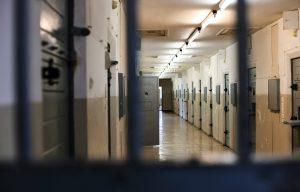
The RSF’s atrocities are now widely reported and investigated, and rightly so. The SAF’s are not, despite extensive documentation of unlawful airstrikes, arbitrary detention, torture, ethnic profiling, and the obstruction of humanitarian aid.
A peace that holds requires that both parties answer for their conduct, not only one.
The SAF has resisted negotiation. By raising the legal and reputational cost of its conduct, we aim to build pressure toward a credible, inclusive political settlement.
Those who fled SAF violence are too often left out of the international conversation. Our documentation puts their testimony on the record.
What we have done
The Sudan Project is built on first-hand testimony and submissions to international mechanisms.
A Just Access team travelled to refugee settlements in Uganda to interview survivors of the conflict now living there, gathering detailed accounts of SAF violations.
Each statement was provided with the informed consent of the witness for use in accountability and advocacy work. For the safety of those who spoke to us, all identities are withheld and testimonies are held securely.
These testimonies form the evidentiary backbone of our submissions to UN calls for inputs, special rapporteurs, treaty and Charter bodies, the UN Fact-Finding Mission for the Sudan, and international justice mechanisms.
Our motivation
Many who spoke to us remain at risk. Safeguarding them guides everything we publish.
A documented, well-argued record can support justice now and in the future.
We want the SAF brought to the table and a durable agreement reached.
The Emergency Response Rooms
The Emergency Response Rooms (ERRs) are neighbourhood-based mutual aid networks that grew out of the resistance committees behind Sudan’s 2019 revolution. With roughly 26,000 volunteers, they run community kitchens, hospitals and clinics, water distribution, evacuations, and support for survivors of sexual violence, having reached more than 11.5 million people.
The legal arguments we are advancing
Beyond documenting violations, the Sudan Project develops legal arguments designed to strengthen protection for victims and widen the avenues for accountability.
We argue that the tribal communities targeted in this conflict meet the criteria recognised in international law for indigenous and tribal peoples: cultural distinctiveness, self-identification, customary governance, dependence on ancestral land, and a history of marginalisation. This framing brings their persecution within heightened protections owed to indigenous peoples and sharpens evidence of group-targeting relevant to genocide.
We argue that the protection owed to older persons should turn on dependency and function, not on a birth-date threshold. Treating dependency as a socially produced condition clarifies the State’s responsibility and the heightened protection these individuals are owed.
We argue that displacement in this war is not an incidental by-product of fighting but a deliberate instrument of territorial and demographic control, with decisive consequences for reconstruction and accountability.
“Foreign faces” is a term used by Sudanese civil society for a practice of ethnic and geographic profiling. We document this practice and press for its recognition as unlawful discrimination.
Our submissions
The project’s findings are presented to international mechanisms through formal submissions and confidential communications. Further submissions and communications are available on request, subject to confidentiality safeguards. Please contact us if a copy would assist your work.
Published submissions are grouped below by submission title and international mechanism.
Further submissions and communications are available on request, subject to confidentiality safeguards.
Formal submissions presented to international mechanisms.
Online War Propaganda, Incitement, Hate Speech and Increased Harm to HRDs in Sudan’s Armed Conflict
Older women, enforced disappearance and the Sudan conflict
Working Group on Business and Human Rights (UN General Assembly, 81st session).
Special Rapporteur on the human rights of internally displaced persons.
Special Rapporteur on violence against women and girls (Human Rights Council, 62nd session).
Expert Mechanism on the Rights of Indigenous Peoples.
UN High Commissioner for Human Rights.
Special Rapporteur on the right to development.
Special Rapporteur on the human rights of internally displaced persons (UN General Assembly, 81st session).
Human Rights Committee (CCPR).
Available on request, subject to confidentiality safeguards.
Special Rapporteur on extrajudicial, summary or arbitrary executions.
Independent Expert on the enjoyment of all human rights by older persons.
Independent Expert on human rights and international solidarity.
Special Rapporteur on violence against women and girls.
African Commission’s Special Mechanism on Prisons, Conditions of Detention and Policing in Africa.
Call for inputs on the protection of human rights defenders in the digital age.
Special Rapporteur on unilateral coercive measures.
Secretary-General’s report on the rights of persons belonging to national, ethnic, religious and linguistic minorities.
Secretary-General’s report on missing persons.
Special Rapporteur on the rights of indigenous peoples (Human Rights Council, 63rd session).
Special Rapporteur on the rights of indigenous peoples.
Special Rapporteurs on human rights defenders, on violence against women and girls, and on torture.
Special Rapporteur on truth, justice, reparation and guarantees of non-recurrence.
Independent International Fact-Finding Mission for the Sudan; and Special Rapporteur on the independence of judges and lawyers.
International Criminal Court, Office of the Prosecutor.
Committee on Enforced Disappearances.
responding to the Mission’s call for information and documentation on violations, abuses and related crimes committed in the context of the armed conflict that began on 15 April 2023 between the Sudanese Armed Forces, the Rapid Support Forces and other warring parties, with a focus on recent violations. Submitted for the current reporting cycle (deadline 31 July 2026).
civil-society stakeholder submission on Sudan’s human rights record, co-signed with the African Centre for Justice and Peace Studies (ACJPS), for the Human Rights Council’s UPR Working Group review of Sudan.
Just Access provides pro bono legal assistance to victims of human rights abuses. Because the Sudan Project is active, we are especially well placed to assist survivors of the SAF and of the wider Sudan conflict to document what happened to you and to bring your case before international mechanisms.
Your safety comes first. If you can, write from a private device and connection. Share only what you are comfortable sharing in a first message — we will agree a secure channel before you send anything sensitive. We treat all contact in strict confidence.
Support the work
Our legal assistance is provided free of charge. The documentation, analysis and advocacy behind the Sudan Project are sustained by the support of people who believe Sudan’s victims deserve to be heard.
Your contribution directly sustains our documentation and accountability work.
For interviews or media inquiries, contact us at contact@just-access.de.
Researchers, lawyers and organisations working on Sudan are welcome to get in touch about our submissions or potential collaboration.
Project updates
This page is updated monthly as new submissions are filed and developments occur. Check back for the latest, or get in touch to be kept informed.