

Jess Rodenheiser
Head of Legal Strategy & Public Interest Litigation
What the response to Macklemore tells us about Palestine, business and human rights, and the power of social pressure
A few years ago, it was difficult to imagine the response to Macklemore’s outspoken support for Palestine looking quite like it does today.
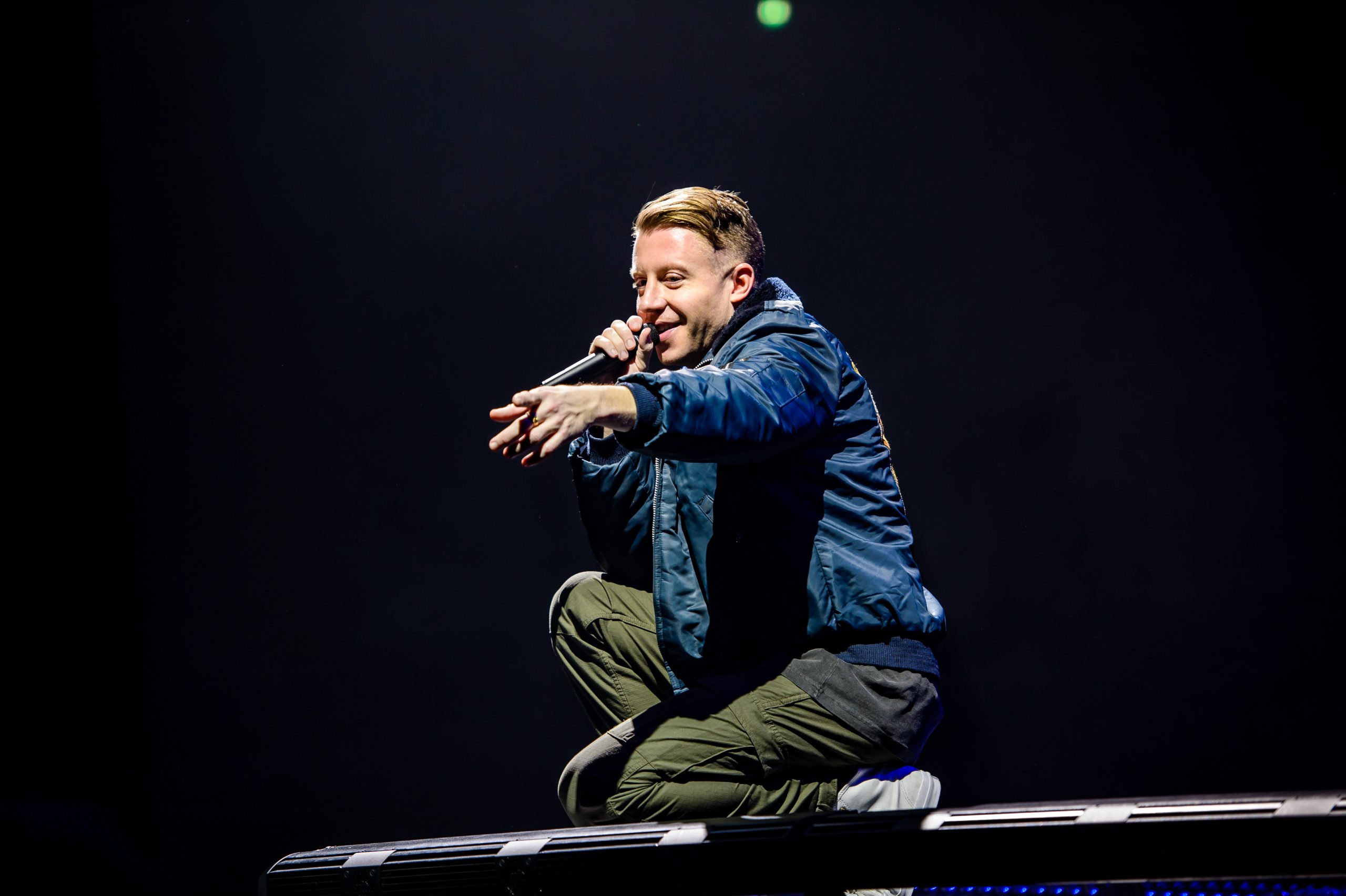
After Macklemore used his opening set on Ed Sheeran’s Loop Tour to express solidarity with Palestinians, he was removed from the remaining US dates. Other supporting artists subsequently withdrew from the tour in solidarity. The individual decisions are interesting. But the shift they represent is much more important.
Three years ago, many artists, celebrities, and companies might have regarded publicly aligning themselves with Macklemore’s position as the reputationally risky choice. Today, increasingly, the opposite may be true. And that tells us something important about how human rights advocacy actually works. Social pressure succeeds not only when it changes minds. It succeeds when it changes incentives.
“Social pressure succeeds not only when it changes minds. It succeeds when it changes incentives.”
When the business calculation changes
We should be careful not to assume why any individual artist chose to speak, withdraw, or remain silent. Some undoubtedly act from deeply held convictions. But major artists are also commercial actors. Around them sit management companies, labels, promoters, venues, sponsors, ticketing platforms, countless contractual relationships, Decisions about who performs, who withdraws, and what speech a tour will tolerate therefore exist within an economic ecosystem.
Reputational risk is part of that ecosystem, which makes the response to Macklemore significant. Whatever the motivations of the individuals involved, the commercial calculation surrounding public support for Palestinian rights appears to be changing.
There is now potentially a reputational cost not only to speaking about Palestine, but to being perceived as suppressing or distancing oneself from that speech. That is a remarkable shift. And it connects directly to a much broader conversation in business and human rights.
Human rights do not stop at the factory door
The UN Guiding Principles on Business and Human Rights reject the idea that businesses exist outside the human rights system. Companies have a responsibility to respect internationally recognised human rights, including by identifying and addressing adverse human rights impacts connected to their activities and business relationships.
In conflict settings, the stakes become even higher. Businesses should conduct heightened human rights due diligence where there is an increased risk of involvement in serious abuses, such as conflicts where international humanitarian law becomes relevant alongside international human rights law.

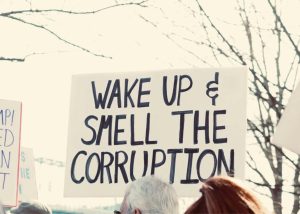
Photo: Brahim Guedich / Wikimedia Commons, licensed under CC BY-SA 4.0. Demonstration in support of Palestine, Kasbah Square, Tunis, 15 May 2021.
We usually discuss these principles in relation to industries with obvious connections to conflict: weapons, finance, technology, logistics, or extractive industries. But cultural industries are industries too. This does not mean an individual musician has identical legal responsibilities to a multinational corporation, nor that international law requires an artist to withdraw from a particular tour.
Rather, the broader principle is useful: commercial actors have leverage, and commercial decisions have consequences. Companies decide with whom they contract, which relationships they maintain, which conduct they associate their brands with, and what risks they are willing to tolerate. The entertainment industry is no exception.
The myth of an “apolitical” business
Businesses and public figures often respond to contentious human rights issues by attempting to remain “apolitical.” But commercial neutrality is rarely entirely neutral. Choosing a business partner is a decision. Keeping one is a decision. Ending a relationship is a decision. Allowing speech on a stage is a decision. These choices can involve genuinely difficult competing considerations. Businesses must, for example, take antisemitism seriously while maintaining the crucial distinction between antisemitism and criticism of the Israeli government or advocacy for Palestinian rights.
But calling a commercial decision “apolitical” does not erase its consequences. This is particularly important against the backdrop of Gaza. The International Court of Justice issued binding provisional measures in South Africa v. Israel under the Genocide Convention. The case remains pending, and the Court has not made a final determination on whether genocide has occurred. But the absence of a final judgment does not mean that actors should wait for one before responding to the serious risks and potential for irreparable harm that prompted the Court to order provisional measures in the first place. Other human rights organisations have reached further conclusions: Amnesty International, for example, concluded in 2024 that Israel is committing genocide against Palestinians in Gaza.
These are questions of international law of the highest gravity. They are not questions that should depend upon what is commercially fashionable. And yet commercial behaviour inevitably responds to the societies in which businesses operate. That is where public pressure matters.
“Human rights movements succeed partly when doing the wrong thing becomes more expensive.”
Changing the price of indifference
Human rights advocates understandably focus on courts, legislation, and international institutions. Those mechanisms matter enormously. But law does not operate in a social vacuum.
Civil society changes what governments believe they can politically sustain. Consumers change what companies believe they can commercially sustain. Employees change what employers believe they can internally sustain. Artists and audiences change what cultural institutions believe they can reputationally sustain. Sometimes human rights leverage looks like litigation. Sometimes it looks like documentation, journalism, protest, boycotts, employee organising, or an artist walking away from a tour.
These mechanisms are not substitutes for legal accountability. But they help create the conditions in which accountability becomes possible. And perhaps that is the more interesting lesson from the Macklemore controversy. It would be easy to cynically conclude that supporting Palestine has simply become better for some celebrities’ brands. But that misses what these movements are trying to accomplish.
Human rights movements succeed partly when doing the wrong thing becomes more expensive. Of course, we should want businesses to respect human rights because human beings possess rights, not because doing so generates good publicity. But when sustained public pressure makes respect for human dignity the commercially intelligent choice as well, it does not mean advocacy has failed. It means advocacy has altered the incentive structure.
For years, Palestinians, journalists, humanitarian organisations, lawyers, and human rights defenders have documented extraordinary suffering and alleged violations of international humanitarian and human rights law. Students have protested. Workers have organised. Consumers have boycotted. Artists have spoken. The result of that pressure is not measured only in judgments or legislation.
Sometimes it is visible in something much smaller: in the moment when an institution looks at the reputational consequences of its choices and realises that the “safe” position has changed. Three years ago, many public figures may have calculated that speaking about Palestine was the risk. Today, silence, or perceived complicity, can carry a risk of its own. That shift did not happen by accident.
That is what social pressure looks like when it begins to become structural.
Support our work!
We can only do our work thanks to the support of brave, passionate people like you!
Your donation will help us to keep fighting for human rights and access to justice for everyone, everywhere.