

Flóra Merész
Legal Intern
Whistleblowers perform an indispensable function within democracies, promoting a culture of accountability and integrity. They report or disclose information about acts and omissions that they come across during their work (whether public or private) that pose a threat or harm to the public interest. As such, whistleblowers bring to light corruption, abuse of power, crimes committed by governments, or other misconduct that would otherwise go unnoticed by official oversight mechanisms.
A whistleblower can be anyone from employees to volunteers to interns. But blowing the whistle takes courage and often requires substantial resources too. Those exposing wrongdoing or misconduct are frequently silenced or face retaliation, such as getting fired, threatened, arrested, or in some cases assaulted or killed.
This is why whistleblower protection is key. When there are official channels of reporting and robust protection frameworks in place, those aware of misconduct are much more likely to come forward and help protect important democratic values.
Whistleblowers have helped unveil public health and safety concerns regarding the tobacco industry, misconduct related to the Covid-19 pandemic, or tax evasion by multinational corporations, saving millions in public funds and protecting fundamental rights. Additionally, a recent case in Hungary, right before the April 2026 elections, has revealed how the previous Orbán government was accused of spying on the now ruling Tisza Party, which constituted the main opposition at the time.
Those exposing wrongdoing or misconduct are frequently silenced or face retaliation, such as getting fired, threatened, arrested, or in some cases assaulted or killed.
This two-part blog series first lays down the legal and conceptual framework with a special focus on the EU Whistleblower Protection Framework. Subsequently, the second part will zoom in on the aforementioned Hungarian case, discussing what it reveals about the efficiency of the EU Whistleblower Directive (2019/1937) and whistleblower protection more broadly.
Whistleblower protection in the EU
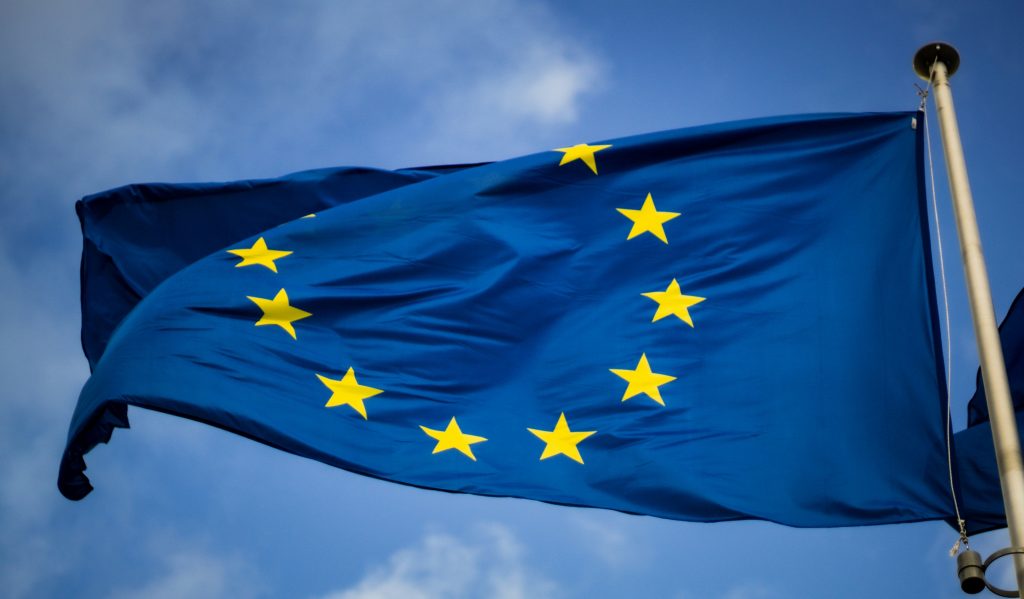
After over a decade of repeated calls from the European Parliament, the European Commission finally proposed a whistleblower protection framework in April 2018, which was adopted by the Parliament one year later and came to be known as the Whistleblower Directive.
The year 2026 is an important marker for the Directive, as the European Commission has just closed its public consultation in April regarding the impact of the Directive and is in the process of deciding on a possible revision. Consequently, it is worth revisiting it and evaluating its success through the case study on Hungary.
The Directive did not emerge in a vacuum. Apart from a patchwork of existing protections in member states and various Resolutions adopted by the Council of Europe on the matter, the European Court of Human Rights (ECtHR) has also built a substantial case law record in the context of the right to freedom of expression. The Directive reflects the latter especially.
Concerning its scope, it applies not only to employees and interns, but also to facilitators, colleagues and relatives of the reporting person who could suffer retaliation, thereby adopting an unusually broad personal scope. As for its substance, the legislation extends to several policy areas, including public procurement, money laundering, consumer protection, and privacy and personal data. However, it leaves a significant gap by excluding working conditions and covering only breaches of Union law.
The Directive provides for three possible channels of reporting: internal, external and public disclosure. Internal channels must be established by companies, whereas external channels refer to competent external authorities, designated as such by member states. Finally, whistleblowers also have the option to disclose misconduct publicly, through the media, subject to certain conditions. Public channels may only be used after an unsuccessful attempt at internal and external channels. Alternatively, the individual blowing the whistle must have reasonable grounds to believe that the wrongdoing may constitute an “imminent or manifest danger to the public interest” or that there was a risk of retaliation or a low chance of appropriate response if external channels were used.
The transposition and implementation of directives in theory and in practice
A recent report released by Transparency International in cooperation with the EU Whistleblowing Monitor and the Whistleblowing International Network this April evaluated the effectiveness of the Directive in EU member states. While the Directive itself has imperfections, the report found that the main problem lies in the transposition and implementation of the framework on a national level. On the one hand, even when member states transposed the Directive word for word, they did not provide for the necessary clarity for enforcement to be efficient. On the other hand, in various cases, national legislation includes additional procedural requirements, hindering the effective protection of whistleblowers. Additionally, institutional fragmentation, the lack of resources and adequate powers, as well as a lack of awareness impede the implementation of whistleblower protection laws.
One reason for the implementation gaps and such disparity between member states is the legal nature of directives. In contrast to regulations, which are directly applicable binding legislative acts, directives set goals that member states must achieve, while leaving them substantial regulatory discretion as to how to achieve the particular objectives. Transposition may be influenced by numerous factors, such as party politics, the directive’s “fit” with existing domestic practice and legislative framework, public opinion, administrative capabilities, or the legislation’s complexity.
[T]he main problem lies in the transposition and implementation of the framework on a national level . . . institutional fragmentation, the lack of resources and adequate powers, as well as a lack of awareness impede the implementation of whistleblower protection laws.
Additionally, even when directives are formally transposed word for word, they are frequently not (correctly) implemented in practice. Several studies indicate that “legal and practical compliance are ‘decoupled’”. Zhelyazkova and Thomann, for instance, find that the more national rules (in quantity) are introduced in addition to the EU directive, the less member states will comply in practice. Whereas, the more restrictive the national legislation is regarding the subject matter of the directive, the more practical compliance is achieved.
Finally, the independence of the judiciary is worth highlighting as a key factor in the practical implementation of directives. In the context of whistleblowers specifically, fair and speedy trials, appropriate sanctions, and the independence of the judiciary in general are crucial for success. Formally implemented laws without effective sanctioning in case of their breach undermine effectiveness.
The entry into force of the Whistleblower Directive in 2019 was a major milestone in the EU. The Directive is largely reflective of ‘best practice’ in whistleblower protection, despite some shortcomings. Nevertheless, its effectiveness is ultimately determined by its national transposition and implementation, including capacity, customisation, and the independence of the judiciary. In the next part of this blog post, the theoretical and conceptual framework outlined here will be applied to Hungary as a case study.
Support our work!
We can only do our work thanks to the support of brave, passionate people like you!
Your donation will help us to keep fighting for human rights and access to justice for everyone, everywhere.